
I wanted to make one more blog post about Anilao to highlight some of the cool critters we got to see. This spot is a macro photographer’s paradise and a favorite for anyone who loves strange and wonderful sea creatures. On a recent trip, I had the chance to meet some of the ocean’s most charismatic residents—some hiding in plain sight, others straight out of a sci-fi movie.
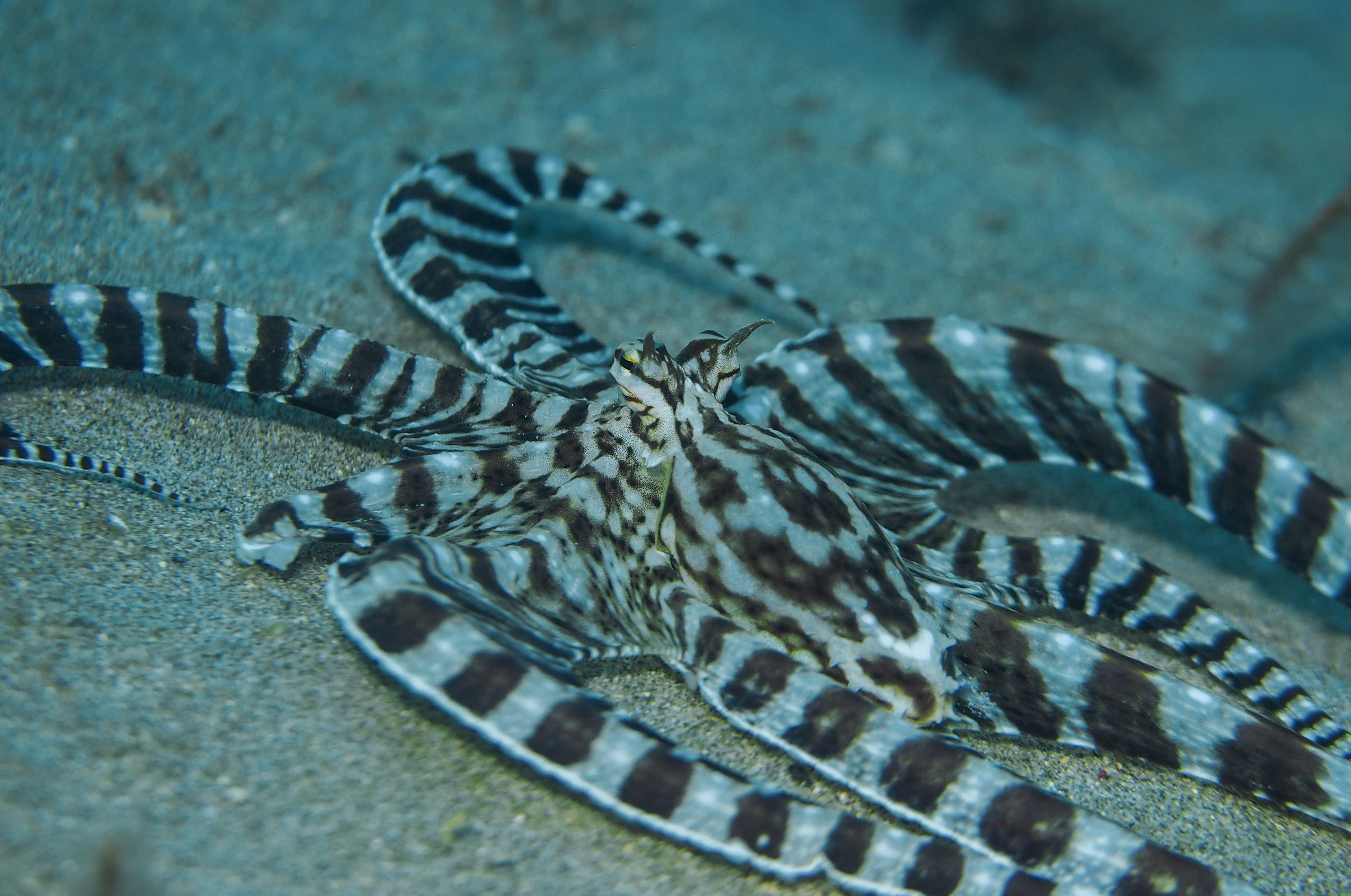
One of our most memorable dives was at a site called Bubbles, where volcanic gases seep from the seabed like an underwater jacuzzi. At around 30 meters deep, we spotted common seahorses clinging to soft corals and debris—an unforgettable sight at that depth, where their delicate forms seemed to sway gently with the current. Just when we thought the dive couldn’t get any better, a mimic octopus put on a show. This master of disguise can impersonate venomous sea creatures like lionfish and flatfish to avoid predators. Watching it morph from one mimicry mode to another felt like witnessing live performance art, eight arms and all. During our safety stop right at the end we also got to see some ornate pipefish. Unless you’re actively looking for them, and sometimes even when you are, they’re incredibly easy to miss. These delicate fish are living camouflage, blending seamlessly into their surroundings like underwater phantoms.


On shallower coral reef dives, we encountered a banded sea krait, a sea snake known for its potent venom but generally docile demeanor. It swam lazily between coral heads, ignoring us completely. David was especially excited for this sighting because it was his first encounter to see one of these beautiful animals.

Among the sandy slopes and rubble zones, we found peacock mantis shrimp, famous for their explosive punches and psychedelic coloration. Their club-like appendages strike with the force of a bullet, and their compound eyes can see polarized light (I have a friend studying their eyes, which are very cool!) One nudibranch that stood out as a highlight was the tiny but unforgettable, Shaun the Sheep nudibranch. Our guide’s sharp eyes were able to point out several to us, as they are known to be grazing on a specific type of algae. These little guys can photosynthesize thanks to stolen chloroplasts from algae, a process called kleptoplasty. Yes, it’s a slug. Yes, it photosynthesizes. The ocean is wild. This tiny nudibranch was only a few mm long too, I have a photo showing the guide’s fingernail as scale.


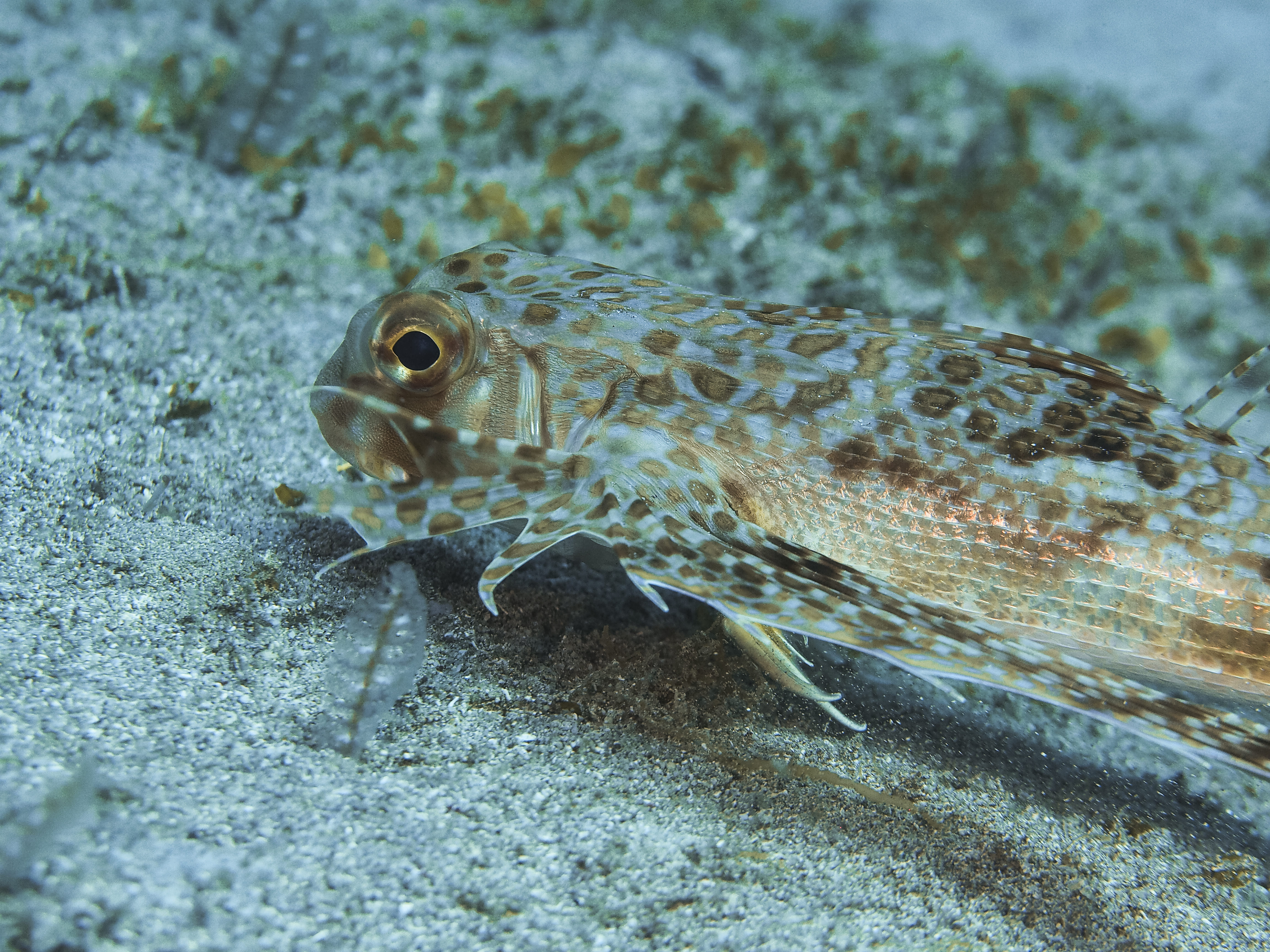
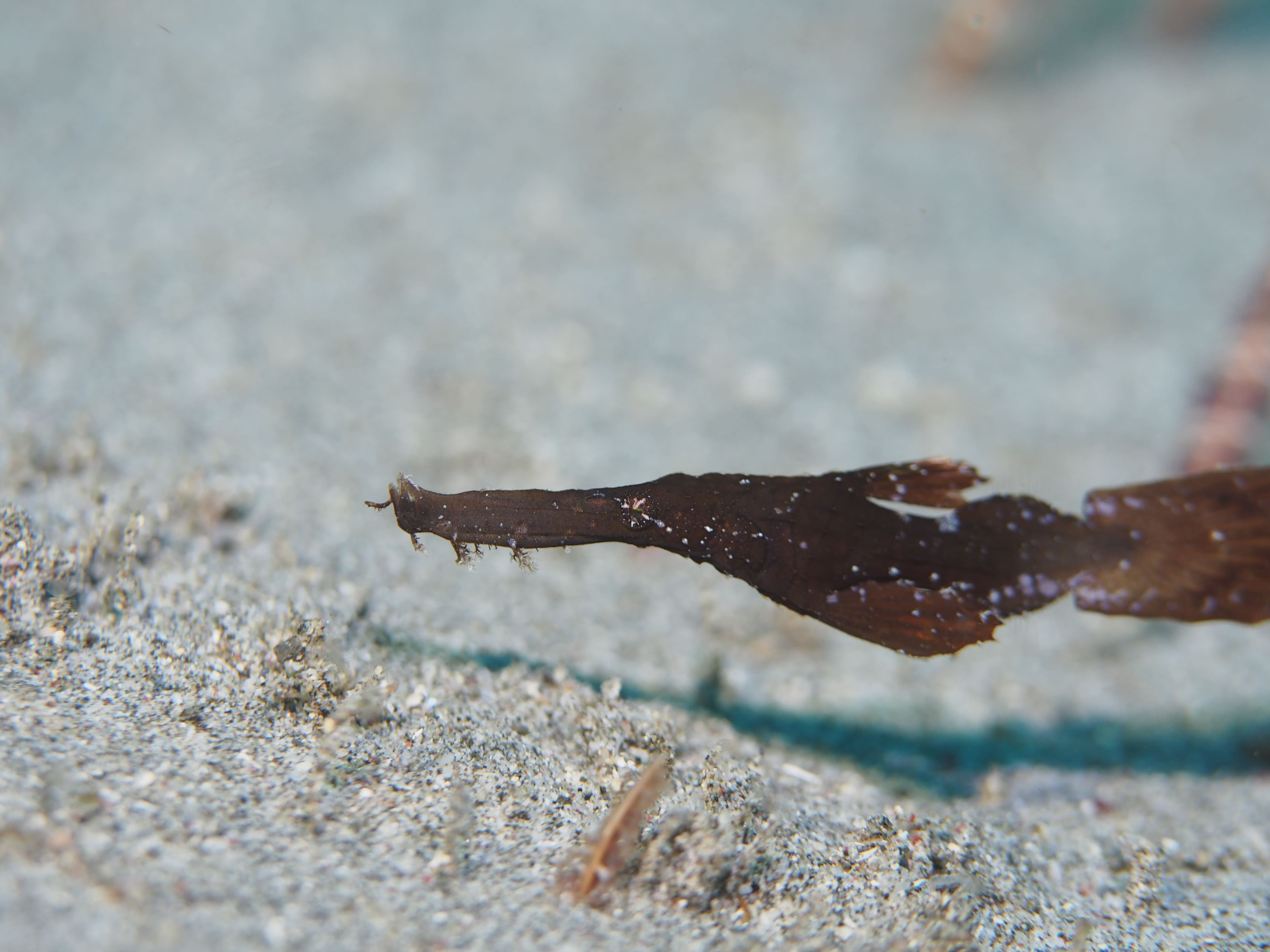
We also saw several species of frogfish expertly disguised as a sponge. It took us several minutes to realize the “sponge” we were staring at was actually a predatory fish, waiting to ambush prey with its extendable mouth. Then there were the flying gurnards, flaring their massive, wing-like pectoral fins like underwater butterflies. We also saw another well camouflaged fish called the robust pipefish which looks like a blade of floating seagrass. I was taking photos of it and David was confused because he didn’t realize what it was, that is how well it camouflages.

We also tried a blackwater dive, an exhilarating night dive conducted in open water over deep water (usually several hundred meters deep), where bright lights are suspended to attract creatures that migrate vertically from the depths each night.
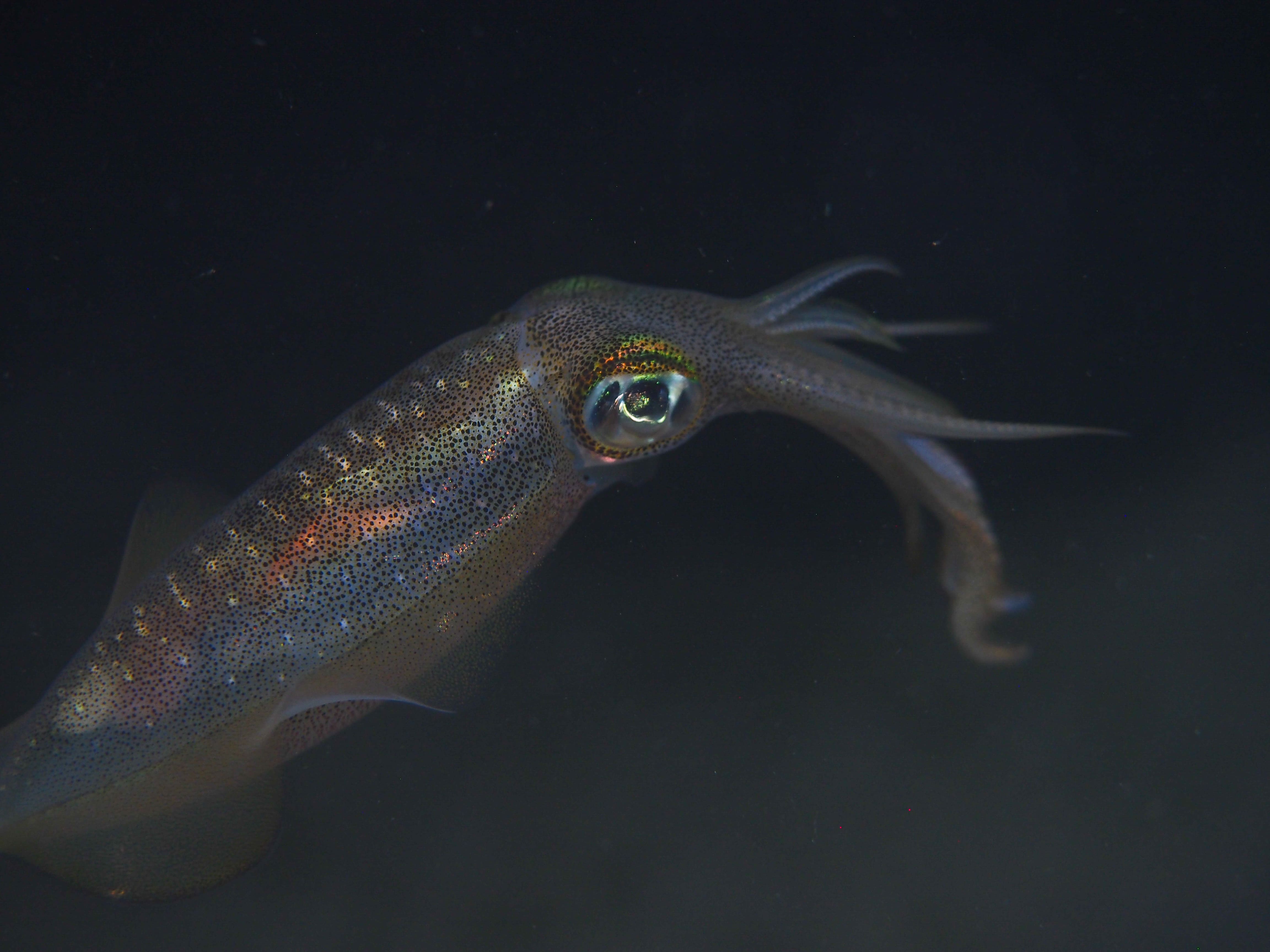
In the inky darkness, we floated like astronauts in space, surrounded by jellyfish, larval eels, and transparent juvenile squids. Many of these critters spend their early life stages drifting in the water column before settling down. Some looked alien—completely see-through or glowing faintly with bioluminescence. Every direction we turned, something tiny and weird pulsed or darted past.
Anilao continues to blow my mind with its diversity and density of life. Whether you’re into tiny nudibranchs, bizarre fish, or cephalopod drama, this place has something to offer every diver. If you haven’t added it to your bucket list yet, do it now.
 adventures